Diabetes doesn’t always come with a warning
Almost half a million Australians are living with silent, undiagnosed diabetes.
Shepparton local, Bill Aldred, has a favourite line for his grandkids, “Call me anything, but don’t call me late for dinner!”
So, when Bill was diagnosed with type 2 diabetes in March 2020, food was always going to be the hard part.
“It was a complete shock,” Bill said.
He had no symptoms. A routine blood test with his GP showed high blood sugar levels, and a second test confirmed it.
With COVID-19 just arriving, his early appointments were by phone, with a pile of paperwork to read.
“Until I met Sumi, I was left by myself,” he said.
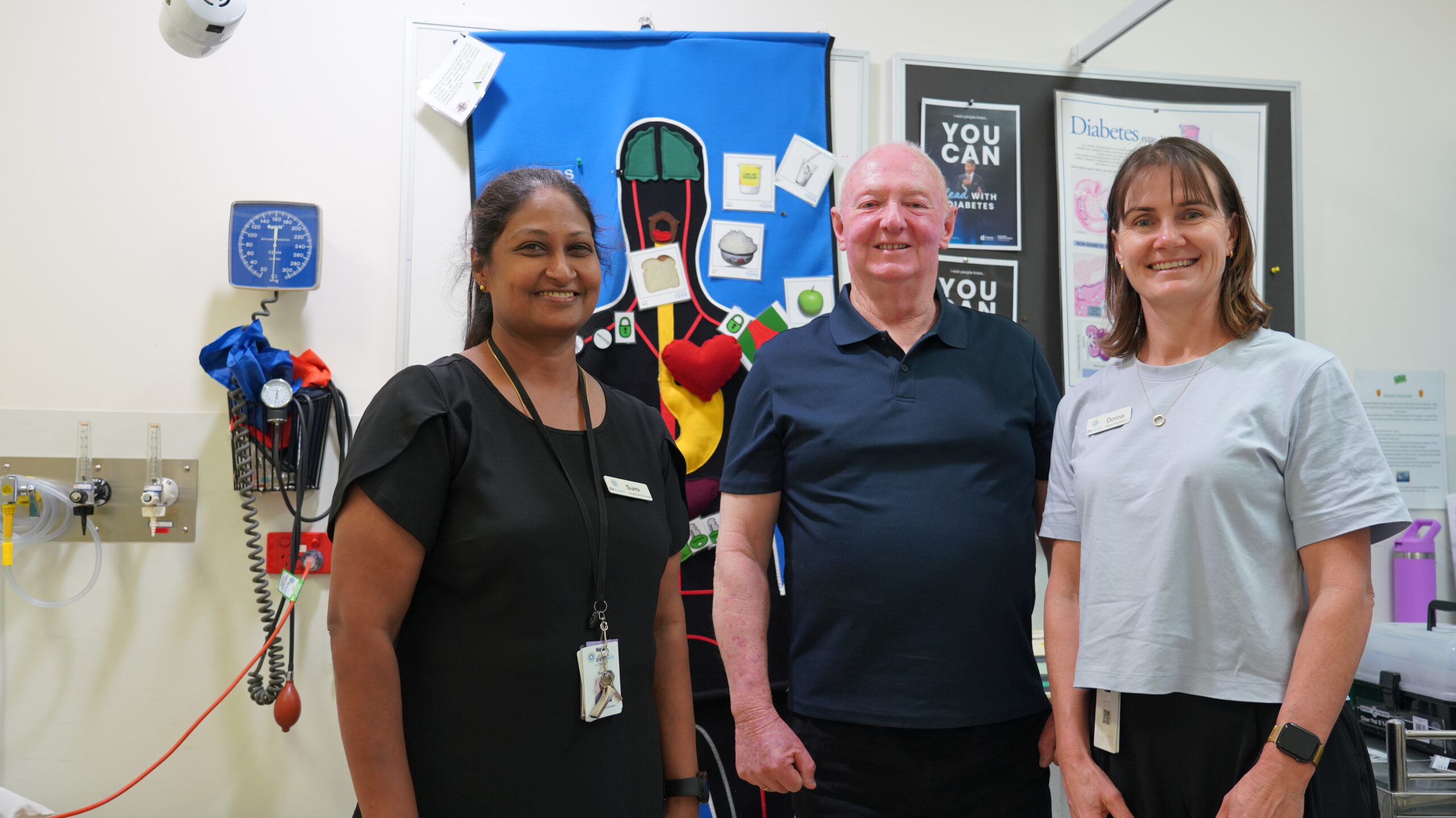
GV Health’s Clinical Coordinator and Diabetes Educator Sumi John said Bill’s doctor had suggested insulin, but he wanted to try other options first.
Together they changed his diet, exercise, and medication, while monitoring blood sugar closely.
“His sugar level is very well controlled now,” Sumi said.
Bill has given up excessive bread, rice, and pasta, avoids sugar and walks every day, parking streets away from his appointments.
“If you know you can’t eat pastry and you see a bakery, go to the other side of the road,” he said.
About 1.7 million Australians are living with type 2 diabetes, including an estimated 500,000 who are undiagnosed, according to Diabetes Australia.
GV Health’s Diabetes Nurse Practitioner Donna Rumbiolo said having no symptoms is common.
“People may not have any symptoms, or they put them down to other things,” she said.
If there are any signs, these may include things like being very thirsty, passing more urine, tiredness, constant hunger, slow-healing cuts, itchy skin, blurred vision, headaches, dizziness, leg cramps, and weight changes. Women in perimenopause may put mood swings down to hormones.
Because these signs could be misinterpreted, Donna said many people were only diagnosed once a complication had appeared, such as eye, foot, kidney or heart problems.
That’s why she encourages regular checks. Anyone aged 40 or over should be checked every three years, and people with symptoms or a strong family history may get checked younger or more often.
Aboriginal and Torres Strait Islander people are advised to start earlier, with a check every year from age 18, as they are more than three times as likely to have diabetes and often develop it at a younger age, according to Diabetes Australia.
Health authorities link this higher risk to family history, along with social factors such as income, food security, access to health care and the ongoing impacts of colonisation.
A check starts with a short risk questionnaire called the Australian Type 2 Diabetes Risk Assessment Tool (AUSDRISK), done with a GP or nurse practitioner or online, followed by a blood test if needed.
Sumi adds the clinic has also been seeing more younger people lately.
“Early detection is better,” she said.
Picking up pre-diabetes, when blood glucose is higher than normal, means lifestyle changes can stop or delay type 2 diabetes. Some people already diagnosed can even put their diabetes into remission.
Donna and Sumi’s advice is to start small.
“Come up with ideas that suit your day-to-day life, because they add up,” they said.
“It might be taking the stairs, or parking further away, like Bill does.”
Bill’s diagnosis has made his family more aware.
“They look at me and ask, ‘What about this?’” he said.
“I say, I’m not a doctor, but don’t delay it. Go and see your doctor and get a blood test.”
His message for anyone newly diagnosed is simple:
“It’s not your fault,” he said.
“Take on board any medical advice you’re given, and don’t sit in the corner and say, ‘Poor me.’”
GV HEALTH DIABETES CENTRE
The centre offers individual consultations as well as a range of services and specialist clinics for people with complex and complicated diabetes.
Self-refer or ask your GP or treating team for a referral.
Open 9 am – 5 pm, Monday to Friday
Phone: 1800 222 582
More information at https://gvhealth.org.au/our-services/community-health/diabetes-centre/